Skills Assessment: What It Is, Examples and How to Test Yourself
Are you feeling stuck in your current job, wondering what you are actually good at? Or perhaps you are a student trying to pick a major, but you feel overwhelmed by the options. You are not alone. Many people struggle to articulate their strengths because they lack an objective way to measure them.
This is where a skills assessment becomes invaluable. Unlike a simple guess or a gut feeling, a structured assessment acts as a roadmap for your professional life. It bridges the gap between what you think you can do and what the market actually values.
In this guide, we will break down exactly what a skills assessment is, the critical difference between hard and soft skills, and how you can try our career skills assessment to gain clarity today. You will learn how to identify your hidden talents and use them to build a career you love.

What Is a Skills Assessment?
At its core, a skills assessment is an evaluation tool designed to measure your proficiency in specific areas. It is not an exam in the traditional sense. You do not pass or fail. Instead, it is an inventory of your current capabilities.
Employers often use these assessments during the hiring process to screen candidates. However, for individuals like you, a skills assessment serves a different purpose: self-discovery. It helps you quantify your abilities so you can make informed decisions about your career path.
Definition & Core Purpose
A skills assessment definition can be broad, but essentially, it is a method used to identify your strengths and gaps. These assessments can take many forms, including:
- Self-rating questionnaires: You reflect on your own abilities.
- Practical tests: You perform specific tasks like coding or writing.
- 360-degree feedback: Peers and managers rate your skills.
The primary goal is to provide data. When you have data, you stop guessing. You gain an objective view of your professional value. This clarity allows you to target jobs that align with your natural strengths, reducing the risk of burnout.
Skills Assessment vs. Personality Test: What's the Difference?
It is easy to confuse a skills assessment with a personality test, but they measure different things.
- Personality Tests: These measure preferences and traits. They tell you how you prefer to work, such as whether you are introverted or extroverted.
- Skills Assessments: These measure capabilities. They tell you what you can do, such as data analysis, public speaking, or project management.
For the best career results, you need both. However, knowing your personality won't help you much if you lack the concrete skills required for a role. Therefore, a comprehensive skills assessment is often the more practical first step for job seekers.
The Difference Between Hard Skills and Soft Skills Assessments
When you take a career skills assessment, you will typically encounter two main categories: hard skills and soft skills. Understanding the distinction is vital because employers value them differently depending on the role.
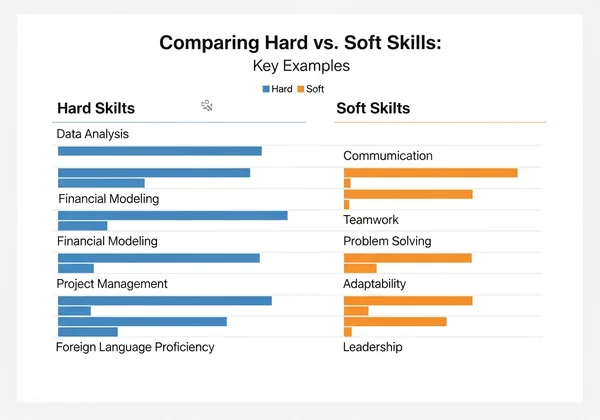
Hard Skills Examples (Technical & Measurable)
Hard skills are teachable abilities or skill sets that are easy to quantify. You typically learn these in a classroom, through online courses, or via on-the-job training. A technical skills assessment usually tests these areas.
Examples of hard skills include:
- Proficiency in a foreign language: such as Spanish or Mandarin.
- Computer programming: using languages like Python, Java, or HTML.
- Data analysis: mastery of Excel, SQL, or Google Analytics.
- Machine operation: skills in driving forklifts or operating surgical equipment.
- Financial management: expertise in bookkeeping or auditing.
Because these are measurable, they are often the first thing a recruiter looks for on a resume. If you lack a specific hard skill, the path to acquiring it is usually clear: take a course or get a certification.
Soft Skills Examples (Interpersonal & Behavioral)
Soft skills, on the other hand, are subjective. They relate to how you interact with others and how you handle yourself in the workplace. While harder to measure, they are often what determines long-term career success.
Examples of soft skills include:
- Communication: How clearly you convey ideas.
- Leadership: How you motivate others.
- Empathy: How well you understand the emotions of colleagues.
- Adaptability: How you handle change and stress.
- Time management: How effectively you prioritize tasks.
A soft skills assessment often uses situational judgment questions. For instance, it might ask how you react if a deadline is moved up. Your answer reveals your adaptability and stress management style.
What Are Transferrable Skills? (The Hybrid Category)
There is a third, powerful category that connects the two: transferrable skills. These are versatile skills that you can take with you from one job to another, regardless of the industry.
Transferrable skills are the secret weapon for career changers. Even if you don't have the exact technical experience for a new role, your transferrable skills might make you a strong candidate.
Common examples include:
- Problem-solving: useful in engineering, customer service, and management.
- Critical thinking: essential for law, marketing, and healthcare.
- Teamwork: required in almost every modern workplace.
If you are looking to pivot your career, focusing on a skills assessment that highlights these attributes is crucial. It proves to employers that your past experience is relevant, even if the job title was different.
Why Take a Skills Assessment Test? (3 Key Benefits)
You might be thinking, "I know what I'm good at. Why do I need to take a test?" The reality is that we often have blind spots. We might overestimate our abilities in some areas and undervalue our true talents in others.
Here are three concrete reasons to take a foundation skills assessment today.
1. Gaining Career Clarity & Direction
The biggest benefit is clarity. When you feel "stuck," it is usually because you are overwhelmed by options or unsure of your value. A skills assessment acts as a mirror. It reflects your capabilities back to you objectively. You might discover that while you are good at administration, you are drained by it, suggesting a move to a different role.
2. Identifying Skill Gaps for Upskilling
Once you know where you want to go, you need to know what is missing. This is called a "gap analysis." If you want to become a Digital Marketer, a skills assessment test might confirm you have excellent writing skills but score low on data interpretation. Now you have a plan to focus your energy on learning analytics.
3. Improving Your Resume & Interview Confidence
Nothing kills interview performance faster than vague answers. After taking a comprehensive skills assessment guide, your answer to "What are your strengths?" becomes specific and data-backed. You can cite specific results, which shows self-awareness and professionalism. Furthermore, listing these verified skills on your resume helps you pass Applicant Tracking Systems (ATS).
How to Take a Reliable Skills Assessment Online
Ready to discover your strengths? The internet is full of quizzes, but not all of them are created equal. Some are just for fun, while others are scientifically validation tools.
Choosing the Right Tool: What to Look For
When looking for a skills assessment online, keep these criteria in mind to ensure you get valuable results:
- Scientific Basis: Is the test based on recognized psychological theories like Big Five or Holland Codes?
- Comprehensive Reporting: Does it give you just a score, or a detailed breakdown of what that score means?
- Actionable Advice: Does the report suggest career paths or next steps?
- User Focus: Is it designed for self-discovery rather than clinical diagnosis?
Avoid tools that promise to "diagnose" you with a medical condition or guarantee a job offer. A legitimate skills assessment provides insight, not magic solutions.
Start Your Free Analysis with CareerQuiz.me
If you are looking for a starting point that balances scientific rigor with ease of use, we invite you to explore our career skills assessment online.
At CareerQuiz.me, we combine established career psychology theories with advanced AI analysis. Our tool is designed to help you uncover hidden strengths, map your skills to modern career paths, and understand your work style. It is free to start, takes only a few minutes, and requires no preparation.
Note: This tool is for educational and self-discovery purposes only. It is designed to help you organize your thoughts and recognize patterns in your abilities.
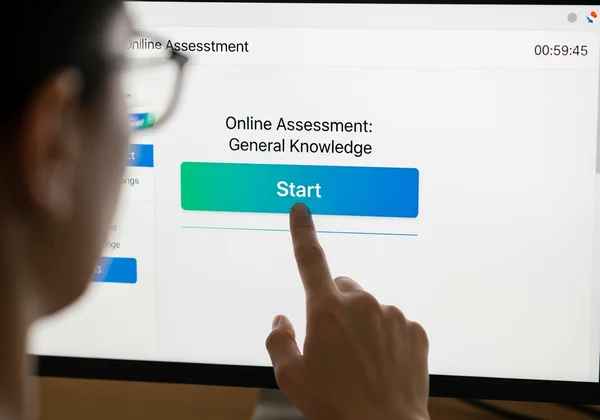
How to Prepare for a Skills Assessment
If the word "assessment" makes you nervous, take a deep breath. Remember, a career discovery assessment is not an exam. There are no right or wrong answers, and you cannot "fail."
Mental Preparation: Honesty is Key
The only way to get a "bad" result on a thinking skills assessment or personality inventory is to lie to yourself. We often feel tempted to answer how we wish we were, rather than how we are.
- Tip: Answer based on your actual behavior in the past 6 months.
- Tip: Don't overthink. Your immediate, gut-instinct reaction is usually the most accurate one.
Reviewing Your Past Experiences
While you don't need to study facts, it helps to review your own history. Before starting the skills assessment, spend 5 minutes thinking about your peak moments when you felt energized and your valley moments when you felt drained. Having these memories fresh in your mind will help you answer situational questions more accurately.
Conclusion
Navigating your career without a map is exhausting. It often leads to trial and error, job hopping, and a lingering sense of dissatisfaction. A skills assessment gives you that map.
By understanding the unique blend of your hard skills, soft skills, and transferrable abilities, you can stop fighting against your nature and start building a career that leverages your strengths. Whether you are looking to polish your resume or pivot to a completely new industry, the data is your best ally.
Don't let another year go by guessing what you are capable of. Take the first step toward clarity today and check your traits with this skills assessment results explained tool. Your ideal career might be closer than you think.
Frequently Asked Questions
Is this skills assessment valid for Australian Visa applications?
No. If you are searching for skills assessment australia or visa 189, you need a "Migration Skills Assessment" from an official government authority like VETASSESS. Our tools are strictly for personal career development and self-discovery, not for immigration or official trade recognition.
Is it possible to "fail" a skills assessment?
No. For self-discovery assessments, you cannot fail at being yourself. A low score in one area simply means it is not a natural strength or an area of interest. This is a positive outcome because it saves you from pursuing a career path that doesn't suit you.
Are free online skills assessments accurate?
Yes, high-quality free skills assessments can be very accurate if they use sound methodology. While they may not offer the depth of a full clinical consultation, tools like ours that rely on psychological theory provide an excellent, accessible starting point for gaining self-awareness.
How often should I retake a skills assessment?
We recommend retaking a skills assessment once every year, or whenever you are considering a major career transition. Skills change as you gain experience and mature. Regular testing helps you track your growth and adjust your career trajectory accordingly.