Jobs That Help People: 24 Meaningful Career Paths to Consider
If you are searching for jobs that help people, you probably want more than a paycheck. You may want work that feels useful, human, and connected to real needs. The challenge is that "helping" can mean many things: direct care, emotional support, education, advocacy, public safety, research, technology, or behind-the-scenes coordination. A career interest and preference assessment can give you a clearer starting point, but this guide will help you compare common paths by work style, training level, personality fit, and long-term growth.

What Counts as a Job That Helps People?
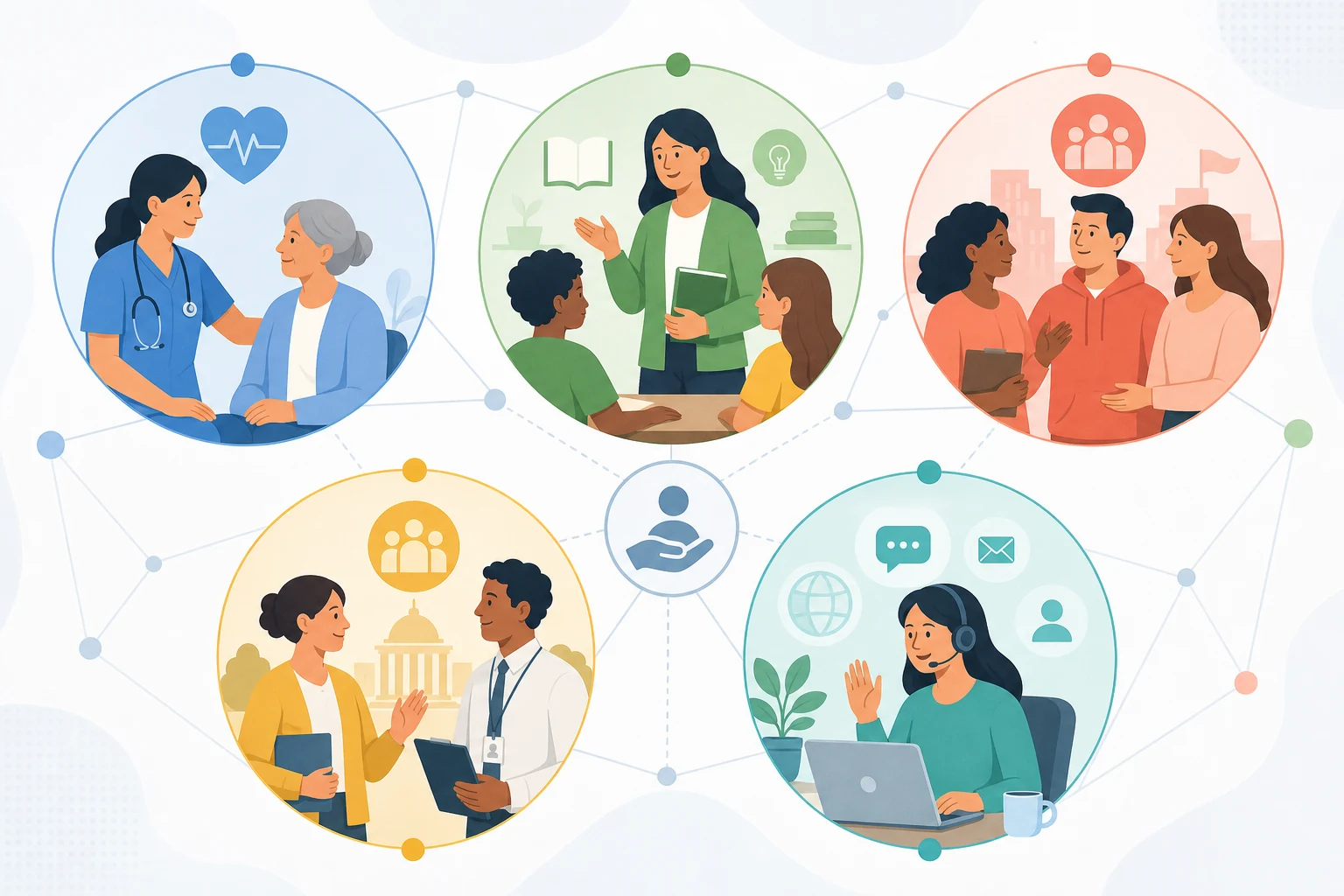
A helping job is any role where your work improves another person's health, safety, learning, access, confidence, or daily quality of life. Some roles are face-to-face, such as nursing, teaching, emergency response, or case management. Others are indirect, such as public health data work, nonprofit operations, policy analysis, accessibility design, or fundraising for community programs.
That distinction matters because not everyone thrives in the same kind of service. One person may feel energized by crisis response. Another may prefer quiet one-on-one guidance. Someone else may want to help at scale through research, software, or public programs. The best job for helping people is not automatically the most visible one; it is the role where your skills, values, stamina, and boundaries can stay useful over time.
24 Jobs That Help People by Work Style
Use this list as a starting menu, not a ranking. Each job can vary by state, employer, education requirements, schedule, licensing, and local demand.
Healthcare Jobs That Help People
- Registered nurse: coordinates patient care, education, and recovery support.
- Medical assistant: supports exams, records, scheduling, and basic clinical tasks.
- Physical therapist assistant: helps patients rebuild mobility under supervision.
- Occupational therapy assistant: supports daily living skills and adaptive routines.
- Community health worker: connects people with health resources and prevention support.
Mental Health, Social Support, and Advocacy
- Mental health counselor: supports clients through structured therapeutic care.
- Case manager: helps people access housing, benefits, treatment, or community services.
- Social and human service assistant: supports social workers and local programs.
- Victim advocate: helps survivors understand options and navigate systems.
- Rehabilitation counselor: supports people with disabilities in work and independent living.
Education and Guidance Roles
- Teacher: helps students build academic, social, and life skills.
- Teaching assistant: gives classroom support and extra attention to learners.
- Academic advisor: helps students choose courses, goals, and next steps.
- Career counselor: supports career planning, job search strategy, and decision-making.
- Tutor or learning coach: provides targeted academic support one learner at a time.
Public Service, Safety, and Legal Support
- EMT or paramedic: responds to urgent medical needs in the field.
- Firefighter: protects communities through response, rescue, and prevention work.
- Public health specialist: designs or supports programs that improve community health.
- Paralegal or legal assistant: helps people and attorneys navigate legal processes.
- Government benefits specialist: guides residents through public services and eligibility.
Remote and Behind-the-Scenes Helping Jobs
- Crisis hotline worker: provides trained support by phone, chat, or text.
- Accessibility specialist: improves products, spaces, or documents for more users.
- Nonprofit program coordinator: organizes services, volunteers, grants, and outcomes.
- Health information technician: keeps patient data accurate, protected, and usable.
Jobs That Help People and Pay Well
Many jobs that help people and pay well require one or more of three things: licensed expertise, technical skill, or responsibility for programs and teams. Examples can include registered nursing, physical therapy, occupational therapy, speech-language pathology, public health management, software accessibility work, data roles in health systems, and nonprofit leadership.
Pay also depends on location, credentials, shift schedule, employer type, and seniority. A role with a strong mission is not automatically financially sustainable, so compare salary ranges, training costs, debt, benefits, advancement paths, and burnout risk together. If you want high paying jobs that help people, look for roles where the market rewards scarce skills and where the daily work still matches your values.
Jobs That Help People Without a Degree
There are entry points for people who do not have a bachelor's degree, although some still require certificates, background checks, state rules, or supervised training. Possible jobs that help people without a degree include home health aide, medical assistant, community health worker, peer support specialist, childcare worker, teaching assistant, emergency dispatcher, patient services representative, and nonprofit volunteer coordinator.
For jobs that help people entry level, look for roles where you can build transferable skills: documentation, scheduling, empathy, conflict management, safety awareness, privacy habits, and resource navigation. A first role does not have to be your final calling. It can show you which populations, environments, and responsibilities you want more of.

Best-Fit Filters for Introverts, ADHD, and Active Workers
Searchers often ask about jobs that help people for introverts. The best matches are usually not "no people" jobs, but roles with controlled interaction, preparation time, and clear boundaries. Consider tutoring, academic advising, medical coding, health information, accessibility testing, grant writing, research support, occupational therapy documentation, or remote case coordination.
For people with ADHD, the question is less about a perfect job title and more about task rhythm. Some people prefer active, varied roles such as EMT, physical therapy support, recreation therapy, field outreach, teaching, or community program work. Others need predictable systems, written checklists, and flexible work settings. If ADHD symptoms strongly affect work or daily life, a qualified professional can help with personalized strategies.
Remote jobs that help people can be a strong fit if you like service but need more control over your environment. Options may include telehealth support administration, crisis chat support, tutoring, benefits navigation, career coaching, accessibility review, nonprofit operations, and customer education for mission-driven products. Before choosing remote work, check whether the role requires emotional labor, phone time, privacy controls, or fixed shifts.
How to Choose a Helping Career Without Guessing
Start with the kind of help you want to provide. Do you want to comfort, teach, protect, advise, coordinate, build systems, solve technical barriers, or improve policy? Then compare the day-to-day reality of each role, not only the mission statement.
Use these filters:
- People served: children, patients, students, older adults, job seekers, survivors, families, communities, or people with disabilities.
- Work setting: hospital, school, home visit, office, court, nonprofit, government agency, field site, or remote team.
- Interaction level: constant direct care, scheduled appointments, group facilitation, or mostly independent support.
- Training path: short certificate, associate degree, bachelor's degree, graduate degree, license, apprenticeship, or employer training.
- Sustainability: pay, schedule, emotional load, physical demands, advancement, and support from supervisors.
A structured career quiz can help you name patterns in your interests and preferences before you invest heavily in one path. Pair that self-reflection with job shadowing, informational interviews, volunteer work, and local labor-market research.

Turn a Helping Instinct Into a Career Shortlist
The next step is to narrow your options to five to eight roles and compare them in real life. Read job descriptions in your area, note repeated requirements, and look for low-risk ways to test interest: volunteering, a short course, a conversation with someone in the field, or a part-time support role.
If you feel pulled toward meaningful work but unsure where to begin, use a career exploration tool as one input in your decision process. The goal is not to let a quiz decide your future. The goal is to turn a broad desire to help people into clearer questions, better experiments, and a career path you can evaluate with confidence.
FAQ
What is the best job for helping people?
The best job for helping people depends on your strengths and the kind of impact you want. Nursing, teaching, counseling, emergency response, case management, public health, and accessibility work can all be meaningful. The best fit is usually the role you can perform well, sustain emotionally, and grow in over time.
What are jobs called that help people?
They are often called helping professions, service careers, human services roles, healthcare careers, public service jobs, education careers, or social impact careers. Some are direct care roles, while others support people indirectly through systems, programs, technology, or policy.
Can I find jobs that help people and pay well without a degree?
Yes, but options vary by location and employer. Some no-degree or short-training roles can grow into better-paid paths through certificates, experience, union roles, shift differentials, or management. Compare total compensation, training cost, schedule, and advancement instead of looking only at the starting wage.
What jobs help people with disabilities?
Possible roles include rehabilitation counselor, occupational therapy assistant, physical therapy assistant, special education teacher, accessibility specialist, direct support professional, vocational rehabilitation specialist, and assistive technology coordinator. Requirements differ, so review local rules and the population you want to support.
Are healthcare jobs the only careers that help people?
No. Healthcare is a major category, but education, public safety, legal support, nonprofit work, government service, counseling, accessibility, technology, and community development can also help people. Many people make a difference through coordination, communication, data, design, or advocacy rather than bedside care.
How do I know if a helping job will fit my personality?
Look at daily tasks, not only the title. Ask whether the role needs constant interaction, crisis tolerance, physical stamina, paperwork, teaching, persuasion, technical problem-solving, or long-term relationship building. Then test your assumptions through shadowing, volunteering, short projects, or guided self-reflection.