Career Quiz Comparison: MBTI vs Holland vs DISC Tests
Choosing the right career can feel like trying to solve a puzzle with missing pieces. You might find yourself asking, what career is right for me? With so many paths available, it is natural to feel overwhelmed or uncertain about your future.
A high-quality career assessment can provide the clarity you need. By analyzing your personality, interests, and behaviors, these tools help you narrow down your options. In this guide, we will compare the most popular assessments—MBTI, Holland Codes, and DISC—to help you find the best fit. If you are ready to gain insights right now, you can Try the free CareerQuiz.me assessment to see how modern tools simplify this process.
Whether you are a student choosing a major or a professional looking for a change, understanding these frameworks is the first step toward a fulfilling career. Let’s dive into how these tests work and which one is right for you.

Understanding the Foundations of Career Assessments
Before picking a test, it is helpful to know what is happening behind the scenes. Not all quizzes are created equal. Some focus on how you think, while others focus on what you enjoy doing.
What Career Assessments Actually Measure
A professional career quiz usually measures one of three things: personality traits, vocational interests, or behavioral styles. Personality traits describe your natural tendencies, such as whether you are energized by people or quiet time. Vocational interests focus on the types of tasks you enjoy, like solving math problems or helping others.
Behavioral styles look at how you act in a work environment. Understanding these differences is key because a job might match your interests but clash with your personality. For example, you might love art (interest) but hate working alone all day (personality).
The Science Behind Valid Career Assessment Tools
Reliable tools are built on psychometric science. This means they are tested for reliability and validity. Reliability ensures that if you take the test twice, you get similar results. Validity ensures the test actually measures what it claims to measure.
When you Compare career quizzes based on scientific principles, you are not just getting a random guess. You are getting a data-driven profile. This scientific foundation is what separates a professional assessment from a fun social media quiz.
MBTI Personality Assessment: Strengths and Limitations in Career Planning
The Myers-Briggs Type Indicator (MBTI) is perhaps the most famous personality test in the world. It categorizes people into 16 distinct types based on four pairs of preferences.
MBTI Personality Types and Career Matches
MBTI looks at four main areas:
- Extraversion (E) vs. Introversion (I): Where you get your energy.
- Sensing (S) vs. Intuition (N): How you process information.
- Thinking (T) vs. Feeling (F): How you make decisions.
- Judging (J) vs. Perceiving (P): How you organize your life.
Your answers generate a four-letter code like ENFP or ISTJ. While these codes reveal soft preferences (like favoring teamwork vs. solitude), they’re best for understanding workstyles—not predicting job fit. For instance, an ENFP might thrive in creative, people-oriented roles, while an ISTJ might prefer structured, detail-oriented environments.
When MBTI Excels in Career Guidance (and When It Falls Short)
MBTI is great for self-discovery and team building. It helps you understand why you communicate the way you do. However, it has limitations. Critics argue that MBTI is not a strong predictor of job performance. It tells you what you prefer, not necessarily what you are good at.
Because of this, MBTI should be used as a starting point for reflection rather than a final answer. It is best used to understand your work style rather than picking a specific job title.
Holland Codes (RIASEC): The Career Interest Assessment Framework
If MBTI is about personality, the Holland Codes are about the work itself. This framework is the gold standard for matching people to specific occupations.
Understanding the Six Holland Career Themes
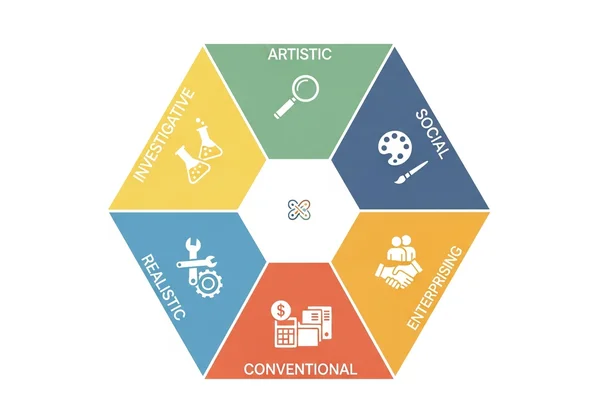
John Holland’s theory suggests that people and work environments can be classified into six groups, known as RIASEC:
- Realistic (Doers): People who like working with hands, tools, or animals.
- Investigative (Thinkers): People who like observing, learning, and solving problems.
- Artistic (Creators): People who have a high need for self-expression and creativity.
- Social (Helpers): People who enjoy teaching, healing, or helping others.
- Enterprising (Persuaders): People who like leading, influencing, and managing.
- Conventional (Organizers): People who like working with data and clear rules.
Most people are a combination of two or three of these themes. A "Social-Artistic" type might enjoy being a drama teacher, while an "Investigative-Realistic" type might be a great engineer.
Holland Codes in Action: Matching Your Interests to Specific Careers
The power of Holland Codes lies in its direct link to the world of work. Most professional databases use these codes to categorize jobs. When you Get your personalized Holland Code report using a RIASEC-based tool, the results are very practical. You get a list of job titles that actually match your "code." This makes it much easier to move from "I don't know what to do" to "I should look into these five careers."
DISC Assessment: Understanding Workplace Behavior Styles
The DISC assessment is widely used in corporate settings. It focuses on how you respond to challenges, influence others, and handle rules.
The Four DISC Dimensions and Workplace Impact
DISC stands for:
- Dominance (D): Focuses on results, confidence, and the big picture.
- Influence (I): Focuses on relationships and persuading others.
- Steadiness (S): Focuses on cooperation, sincerity, and dependability.
- Conscientiousness (C): Focuses on quality, accuracy, and expertise.
In a career context, DISC tells you how you will behave in an office. High 'D' DISC types thrive in leadership. If this is you, aim for roles where quick decisions matter—think startup founder or project lead. Someone with a high "C" might prefer a role where precision and logic are the most important factors.
DISC for Team Dynamics and Career Advancement
DISC is incredibly useful once you are already in a job or if you are looking to advance into management. It helps you understand how to communicate with your boss and colleagues. While it is less about "finding a career" and more about "how to succeed in your career," it is a vital tool for long-term professional growth.
CareerQuiz.me's Unique Approach: Combining Science with AI Personalization
Many traditional tests are decades old. While the theories are still sound, the way we work has changed. This is where modern tools like CareerQuiz.me come in.
The Scientific Foundation of CareerQuiz.me's Assessment
CareerQuiz.me’s assessment uses Holland Codes and other proven models. We translate psychology into modern career mapping—without outdated job examples. By answering a series of targeted questions, you provide the data needed to map your profile against thousands of potential career paths. You can Explore AI-powered career insights to experience this scientific approach firsthand.
How AI Enhances Career Assessment Results
What makes CareerQuiz.me different is the use of Artificial Intelligence. Traditional tests give you a generic PDF report based on a few categories. CareerQuiz.me uses AI to look deeper.
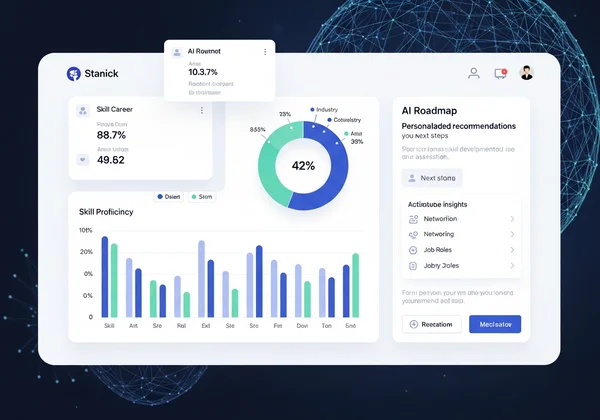
The AI can take your specific background and the current job market into account. It provides a career assessment that feels like it was written by a human consultant. You get clear, actionable advice and a personalized plan that goes beyond a simple list of jobs. To see your personalized insights, you can Access your AI-driven career roadmap after completing the quiz.
Choosing the Right Assessment: A Decision Framework
With so many options, how do you decide which one to take? The answer depends on your current situation and goals.
Assessment Selection Based on Your Career Stage
- For Students: If you are a student, focus on interests. The Holland Codes framework is your best bet because it links directly to college majors and entry-level jobs.
- For Career Changers: If you are unhappy in your current job, use a combination. First, identify why your current role isn't working via personality tools like MBTI. Then, find what you would rather be doing through interest-based models like Holland.
- For Professionals: If you want to get promoted or lead a team, look at behavioral assessments like DISC to improve your workplace relationships.
Cost vs. Value: Finding the Right Assessment for Your Budget
Official MBTI and DISC assessments can be expensive, often costing $50 to $150 per person. While they offer depth, many people just need a clear direction without a high price tag.
Online tools offer a great balance. You can often find a high-quality career quiz that provides a summary for no cost. For those who want the full, AI-driven deep dive, the paid options are usually much more affordable than traditional corporate tests while offering more personalized advice.
Your Career Roadmap: Get Started Today
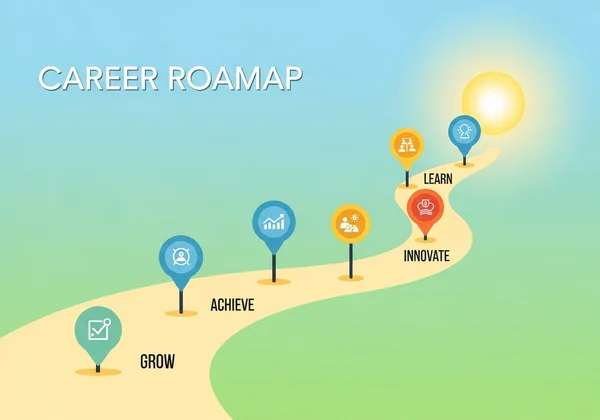
Think of your results as a GPS—it won’t drive for you, but it’ll highlight your best routes. By understanding the foundations of personality (MBTI), interests (Holland Codes), and behaviors (DISC), you are better equipped to navigate the job market.
Don't let uncertainty hold you back from a career you love. Use the science of psychology and the power of AI to clear the fog. Still unsure where to start? Our quiz gives tailored advice in under 10 minutes—no crystal balls required. Take the free CareerQuiz.me assessment today and discover the path that was meant for you.
FAQ Section
What is the best career quiz for students?
The best career quiz for students is one that focuses on vocational interests, such as those based on the Holland Codes (RIASEC). Students often lack work experience, so measuring what they enjoy—rather than past behavior—is more effective. You can Start your free assessment on our homepage to see how interests match with future majors.
Are career quizzes accurate?
Career quizzes are highly accurate when they are based on established psychometric theories and when the user answers honestly. While they cannot predict the future, they are excellent at identifying patterns in your preferences that lead to higher job satisfaction.
How do I find a career I love using assessment results?
Once you have your results, look for the "themes" in your top career matches. Don't just look at the job titles; look at the daily tasks. If your results suggest you are "Investigative," look for roles that involve research and problem-solving in any industry you enjoy.
Is the CareerQuiz.me assessment free?
Yes, CareerQuiz.me offers a free version of the test that provides a quick summary of your results. For users who want a deeper, AI-powered analysis with specific action plans, a detailed premium report is also available. You can View your personalized results immediately after finishing the questions.